writing
Only my work I am most proud of in addition to my award-winning publications (1st places only) are featured on this website. My other publications can be found across the websites of The Sumter Item, Lexington County Chronicle, My Horry News, The Sun News and The Post & Courier.
*I took each featured photo, unless otherwise indicated below the photo
Townfall: A gift or something else? Power and police in Pelion.
By Bryn Eddy
Daniel Shumpert, a council member in this rural Midlands town, gave the police chief a $500 gift card in 2023 to the family’s grocery store. The chief later described the move in a sworn affidavit as “a quid pro quo for turning a blind eye” to what he described as “improper activities” by Shumpert family members who ran the town.
John Rebolj, the former chief, said in the affidavit that he was so uncomfortable with Shumpert's gift card that he logged it as evidence. He eventually resigned from the department amid clashes with Shumpert and his father, Frank Shumpert, the mayor. In his affidavit, he called what happened “a type of small town tyranny.”
Frank Shumpert said his grocery store's charitable donations were “pretty much common knowledge” in Pelion. “That’s the kind of thing we do, and here we are being accused of doing evil things when we’re only trying to help,” he said.

Hearings leading up to Murdaugh’s new murder trial in 2027 will take place in Lexington
By Tiffany Tan and Bryn Eddy
The new murder trial for disgraced attorney Alex Murdaugh is set for April 2027, and his pretrial hearings will take place in Lexington County, a hundred miles north of Colleton County where his wife and son were shot to death in 2021.
The location for Murdaugh’s retrial — after the S.C. Supreme Court threw out his convictions last month — has not yet been determined. But the newly appointed presiding judge, Debra McCaslin of Lexington County, said she wants to move the case toward trial at a brisk pace.
“When I set a trial date, I don't do continuances,” McCaslin said at Murdaugh’s first pretrial hearing at the Lexington County courthouse on Monday morning. “We’re going forward.”

PHOTO BY Tracy Glantz, The State/Pool
Students demand apology from Lexington 1 board member for criticizing Black History Month event
By Bryn Eddy and Natalie Szrajer
Students from the Amplifying Black Voices group at River Bluff High School attended a Lexington County School District One event on March 19 to demand an apology for and detail the impact of a Facebook post and comment made by a board member calling their Black History Month fashion show “disgusting” and “ghetto,” among other adjectives.
Discussions at Thursday night’s Community Conversations—a recurring event intended for parents and community members to ask board members questions and share concerns—teetered between passionate statements from students and parents regarding Board Member Kathryn McCown’s March 1 Facebook post and comment, and topics typical of Community Conversations events, such as electronic device use in schools and facility upgrades.

Chihuahua bred in Lexington County wins ‘Best of Variety’ at Westminster 2026
By Bryn Eddy
A nice round apple head. Nice ears set in the right place. Big, bold eyes. A short nose.
These are characteristics award-winning Chihuahuas likely have; Nacho, born and bred in Lexington County, has each of those, plus some.
He smiles. He loves being in the show ring. He’s outgoing, defying pesky stereotypes tied to the world’s smallest breed. He’ll let anyone touch him.
This year, 3-year-old Nacho, also known as Nacho Average Dip, took home a grand title from the Super Bowl of dog shows, The Westminster Kennel Club Dog Show.

Uncovered: SC town known for ‘peanuts and Shumperts’ paid for a private probe that critics say targeted rivals
By Bryn Eddy and Tiffany Tan
Prodded by its longtime mayor, this tiny town spent thousands of dollars to hire a private consultant to investigate its police chief in a probe that critics said also was an attempt to intimidate the mayor’s rivals.
Mayor Frank Shumpert denied that the town hired the investigator for political reasons, with his attorney describing the criticism as a smear campaign.
But the investigation and its aftermath prompted three officials to leave the government, triggered at least one state ethics inquiry and prompted the private investigator to urge officials to put aside their squabbles.
Pelion’s turmoil raises wider questions about accountability and how municipalities police themselves, especially in small towns where a single family holds sway, an Uncovered investigation by The Post and Courier and The Lexington County Chronicle found.
Pelion isn’t the only South Carolina town hit by recent allegations of questionable internal scrutiny.

Ex-Lexington County state Rep. RJ May sentenced to over 17 years for distribution of child sexual abuse material
By Bryn Eddy
The longtime federal judge who sentenced former state Rep. RJ May III to 17 and a half years in prison on Wednesday for distribution of child sexual abuse material said the case was one of the most severe she has presided over.
May, a West Columbia Republican who represented Lexington County in the South Carolina State House of Representatives from 2020 until he resigned in 2025 after his arrest, was also ordered to pay $58,500 to the eight victims whom government officials were able to contact. Upon release, May will be under supervision for 20 years, and he will be a registered sex offender for life.
The 39-year-old, a founding member of the far-right House Freedom Caucus who pleaded guilty in September to distributing CSAM in April 2024, proposed a five-year sentence for himself. U.S. District Judge Cameron Currie, who has presided for over 30 years, however, imposed the 17-plus-year sentence. Prosecutors had asked for 20 years.

Midlands water politics boil over: Is Batesburg-Leesville mayor scapegoat for S.C. ethics issue?
By Bryn Eddy and Sophia Sousa
The South Carolina Ethics Commission penalized a Midlands mayor who gets a per diem by serving on Lexington County’s largest water supplier, a role and reimbursement many other Midlands mayors (and other kinds of public officials) also have but haven’t faced repercussions for.
This mayor has appealed the decision, saying he was advocating for his rural town’s water needs just as all the other mayors and council members sitting on such commissions do, which made him wonder if he’s a scapegoat for the ethics commission’s problem with the water commission’s per diem.
What brought his name to the ethics commission in the first place, the two-term mayor said, was drama among his own council.

We’re a small business, too
By Bryn Eddy
On East Main Street in downtown Lexington is a little blue house. That’s us. We love our location, its proximity to O’Hara’s Bakery, Old Mill Brewpub, a few spas and many other small businesses that are vital parts of Lexington County’s small business community.
I’ve heard it multiple times: “Lexington County loves its small businesses.” I’ve also heard this multiple times: “I shouldn’t have to pay to read the newspaper.” And this: “The newspaper should be covering this.”
I have written about a ton of small businesses. I’ve learned about their humble beginnings. Their early and current struggles. Their stories.
The common thread in all their successes was community support.
And readers love those stories. They find small businesses’ small beginnings inspiring.
The Lexington County Chronicle is a small business, too. But I have found some people are less thrilled with our small beginnings.

Republished by the Columbia Star and the S.C. Press Association
Beekeeping takes a family
By Bryn Eddy
Morgan Day has hardly ever been scared of bees, but her older brothers are.
So every weekend, the 15-year-old and her dad, David Day, do what David says wouldn’t be possible without Morgan: care for thousands of bees across multiple Midlands counties.
David got into beekeeping in 2010. He said he wanted to get into some kind of farming, and was drawn to beekeeping because of their self-sufficiency, though that’s not to be mistaken for low-maintenance.

1st Place, Profile Feature Writing, Division F, S.C. Press Association
Uncovered: Mayesville elected a new mayor. Then things got weird.
By John Ramsey and Bryn Eddy
Chris Brown's 27-vote margin of victory in the November mayor's race was nearly a landslide in this small town, where more than half of the population showed up to cast a ballot.
Winning would turn out to be the easy part.
Brown moved to South Carolina from Utah two years ago. Last fall, he stunned many locals by unseating Mayor Jereleen Miller, whose family roots in Mayesville reach back centuries. But despite his new title, Brown soon found he couldn't even get the keys to town hall after being sworn in.
1st Place, Reporting-In-Depth, Divisions B&C Combined, S.C. Press Association
Uncovered: Mayesville chaos continues with canceled meetings, fight at town office
By John Ramsey and Bryn Eddy
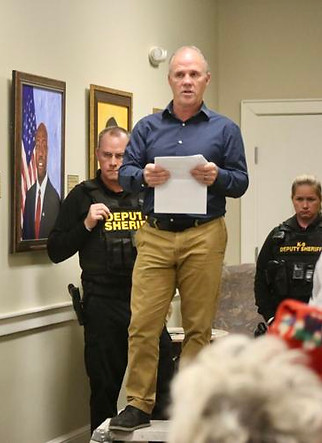
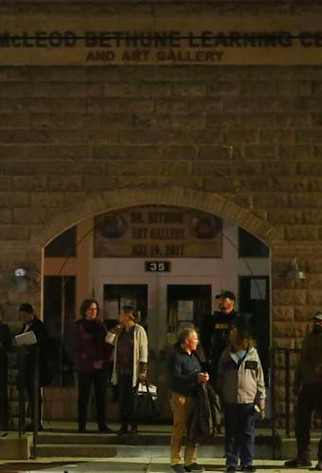
The simmering dysfunction in this town ramped up this week with conflicting messages about town meetings, a ruckus in municipal offices that left the town clerk injured enough to visit a doctor and the mayor stumping for a crowd from atop a bench in a crowded hallway.
Mayor Chris Brown had called for a Town Council meeting on Jan. 23 followed by a meeting of the nonprofit board linked to economic development in Mayesville. But the Town Council canceled the first meeting, irked by Brown's last-minute additions to the agenda.
1st Place, Reporting-In-Depth, Divisions B&C Combined, S.C. Press Association
Mayesville residents may be its quarrelsome town council's only hope, experts say
By Bryn Eddy
When Shawna Moye moved to Mayesville about four years ago from Charleston, she was looking forward to living a quieter life.
One with less road congestion and urban sprawl. And most importantly, one with nicer local folks.
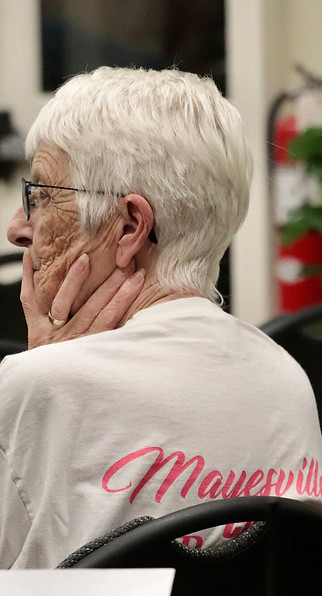
So she picked Mayesville. A town with 548 residents, according to the most recent Census data, a convenience store, beautiful historic homes and council chambers with walls covered in oil paintings detailing Black history - veterans, trumpeters, athletes, politicians and more.
When she attended a town of Mayesville council meeting in those same chambers when former longtime mayor Jereleen Miller was still in the seat, Moye was disappointed to sense hostility among her town's leaders.
1st Place, Reporting-In-Depth, Divisions B&C Combined, S.C. Press Association
Lifelong Sumter County residents thought they lived on public road, but now they're being told it might be private
By Bryn Eddy
Lesa Geddings and her 5-year-old grandson used to wave at the scraper when it would come to service their street in rural Sumter County. The boy loved watching the large machinery even out the dirt.
But now he's 6 and hasn't seen a scraper since last year. Kangaroo Lane is in rough shape with pot holes and divots, and while he might like to joke that Nanny's car gets stuck in mud, Nanny, or Lesa, doesn't think it's so funny.
Even in good weather, Kangaroo Lane in the Pinewood area is a trek to travel. The red dirt road that starts in Sumter County and ends in Clarendon County is plagued with what looks more like craters on Mars than potholes on a residential road.
And while potholes are nothing out of the ordinary to South Carolinians, particularly ones who live on dirt roads, the Geddingses say the ones on Kangaroo Lane are not only inconvenient, but also dangerous and even life-threatening. They're worried about if they need an ambulance and it won't be able to traverse the craters in time.
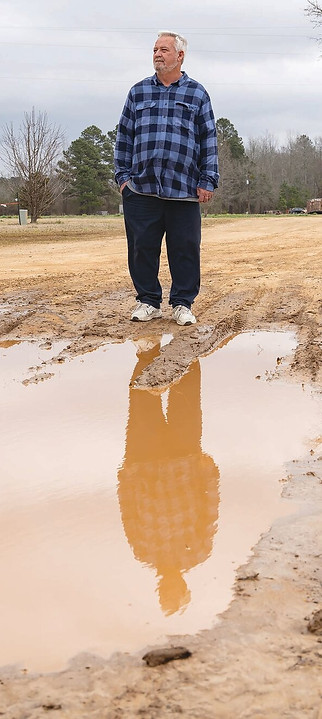
PHOTO BY ADAM FLASH | THE SUMTER ITEM
1st Place, Government Beat Reporting, Division C, S.C. Press Association
Sumter County cannot maintain private roads, but some officials are trying to change that
By Bryn Eddy
There's a red-dirt road running half a mile into the woods where water gathers in every crevice after rainfall, mud congeals over stones, lethargic-looking trees stretch their limbs over it, poking one another, and pregnant cats find haven amid the bumpy terrain that's long, narrow and resembles a vein, crooked, winding and unpredictable, so much so that more than one car is a clot.
If the drivers' schedules line up too well and their comings and goings collide, their cars just about do, too, on this narrow, red-dirt road. There's only room for one, and the only thing more difficult than driving forward on this road is driving backward.
And this, this relatively treacherous journey from one's front door to the street sign, is an everyday to-do for the residents living on Shakemia Road in Sumter County, as it is for the residents of numerous other rural private roads in the area.

PHOTO BY ADAM FLASH | THE SUMTER ITEM
1st Place, Government Beat Reporting, Division C, S.C. Press Association
Sumter County litter officers do what it takes to hold litterbugs accountable
By Bryn Eddy
You learn a lot about someone through their belongings.
That was author Tim O'Brien's message in his book "The Things They Carried." He wrote about items soldiers in Vietnam kept on their person amid war - poems from lovers, letters from mothers, books and other items that were indicative of their personal lives.
And in a much smellier, less literary sense, you also learn a lot about someone through what they trash and how they trash it.
When people toss cups out the car window, junk mail in a ditch, shredded recliners in a river bank, they are littering. And seeing that, according to Lt. Michael McCoy, says all you need to know about a person.
"That they don't give a damn," he said.
PHOTO BY ADAM FLASH | THE SUMTER ITEM
1st Place, Government Beat Reporting, Division C, S.C. Press Association
Sumter coin collectors say they’re in it for the art, history and friendship
By Bryn Eddy
Banks don’t issue their own currency anymore, but at some point in history, likely between the mid-19th century and early 20th century, currency was printed in Washington, D.C., with the words “The National Bank of Sumter” on them.
Then uncut sheets of these notes traveled to what was the Bank of Sumter on the corner of West Liberty and North Main streets. Today, it’s Grady Ervin & Co.
It was in this building, however, that the bank’s cashier, who was local to Sumter, and the bank’s president signed their names on each one, whether $5 or $10 bills, that had the words “The National Bank of Sumter” on them, while other bills were stamped. These signed or stamped bills were then cut and entered the local economy, and who knows whose hands they passed through, but decades later, some of their journeys are still underway.

PHOTO BY ADAM FLASH | THE SUMTER ITEM
1st Place, Lifestyle Feature Writing, Division C, S.C. Press Association
‘From Wall Street to bagels.’ Lexington baker says the overnight shift has served him well
By Bryn Eddy
More than four decades ago, Jeff Dorf was getting used to Wall Street life. Wanting to make his father proud, the Brooklyn native wore suits and ties at the Florida-New York Stock Exchange.
“It’s a funny story,” he said, recalling a mid-Manhattan morning in 1980 something when he instead accompanied his friend to a bagel shop stretched thin. Someone had called in sick.
“They put me right in front of the oven, and that was it.”
Multiple nights a week, O’Hara’s Bakery Café of Lexington has disco music playing inside. The empty booths and chairs, bar seats and high-top tables locals filled from 7 a.m. to 2 p.m. reflect a tidbit of light from the kitchen where the music is. And that’s where Jeff works. Roll, roll, rolling, he says. Overnight.

PHOTO BY KAI KOKES | THE LEXINGTON COUNTY CHRONICLE
1st Place, Profile Feature Writing, Division F, S.C. Press Association
'It's not a luxury': As SC looks to remove tax on period products, other challenges linger
By Bryn Eddy
Shaylin Caldwell was wearing turquoise shorts when she got her first period at school.
She was leaning on the back of a chair in her seventh grade classroom when her teacher asked her if she wanted to sit down.
Caldwell didn’t quite understand why her teacher said that. Then her friend pointed to her shorts. Her turquoise shorts, now stained red, startled the 12-year-old.
“Like I knew what was happening, but I still didn’t really understand,” said Caldwell, now a 19-year-old student at Coastal Carolina University. “I didn’t know what a period felt like.”
With her jacket tied around her waist, she went to the bathroom, crying and embarrassed, to call her mom.
“She said the day was almost over, so I just had to ride it out,” she said. “I went to art class next and I couldn’t focus. I was devastated.”
As a college student, Caldwell now helps her school’s social justice club make period packs to donate to those in Horry County who sometimes have to “ride it out” each month when their period comes because they can’t afford essential products. But health advocates maintain that South Carolina can do more to improve access to these items, especially in schools.

PHOTO BY JANET MORGAN / MY HORRY NEWS
1st Place, Enterprise Reporting, Division E, S.C. Press Association
'Sprayed and betrayed.' Agent Orange leaves lingering impacts on Myrtle Beach veterans, their families
By Bryn Eddy
Roddy Lewis grew up there.
There, on the edge of the jungle as an 18-year-old Airman. There enemy soldiers jumped out of graveyards firing at his base. When he talks about Southeast Asia, his voice is distant sounding more like a teacher giving a history lesson rather than a man who had survived.
There he sloshed through an herbicide sanctioned by the U.S. government in the Vietnam War.
That herbicide is what he blames for killing his brother. That herbicide is what he blames for his bladder cancer. That herbicide is what is consuming the men sitting around the table at the Veterans Cafe and Grill in Socastee on Wednesday mornings. That herbicide is what they talk about between bites of sausage and eggs or sips of coffee.

PHOTO BY JANET MORGAN / MY HORRY NEWS
1st Place, News Feature Writing, Division C, S.C. Press Association
Sumter VFW Post 3034 may be haunted. Ghost hunters came to verify
By Bryn Eddy
Amid the clinks of liquor bottles — Jameson, Jim Beam, Tito’s, Smirnoff — and in front of some wood-paneled walls original to the 1950s and even in the women’s bathroom, with its creaking stall doors and pink tiled walls, something may be lurking at the Veterans of Foreign Wars Post 3034.
Perhaps it’s something sinister, perhaps something friendly; nevertheless, it seems to call the Gion Street VFW home. It must not mind the smell of lit cigarettes pinched between the fingers of Sumter veterans or the sounds of them chatting, laughing and making a routine of visiting the local veterans’ hub.
The potential apparitions’ tolerance of it all ...

PHOTO BY ADAM FLASH / THE SUMTER ITEM
1st Place, News Feature Writing, Division C, S.C. Press Association
USC Sumter professor and poet remembered as brilliant, fiery by friends and family
By Bryn Eddy
Poetry can find the common thread among seemingly unrelated topics. It stitches together parts of the human experience into lyrical linens, so to speak - some short, some long, some rhyming, some not.
Sumter poet Michele Reese sewed together strawberry picking and polymer manufacturing, swim practice and growing up as a person of color, and she did this, this written threading of themes and such, for decades.
She died in her home on July 27. She was born in Texas on Jan. 17, 1973, but grew up in Parkersburg, West Virginia, and moved to Sumter in 2002 for her career at the University of South Carolina Sumter as an English professor.

PROVIDED BY REESE FAMILY TO THE SUMTER ITEM
1st Place, Obituary Writing, Division C, S.C. Press Association
Missing no more: Brittanee Drexel’s remains found in SC years after disappearance
By Bryn Eddy
The remains of Brittanee Drexel were found on May 11 in Georgetown, South Carolina.
Drexel was 17 years old in 2009 when she was reported missing from Myrtle Beach. She was visiting the area from Rochester, New York with some friends. She was last seen on surveillance video leaving the Blue Water Resort, on Ocean Boulevard.
Media had swarmed to Georgetown County last week following the reported arrest of Raymond Moody, previously named a person of interest in Drexel’s disappearance.

PHOTO BY JASON LEE / THE SUN NEWS